
Search the web for corporate gifts and you get mugs, pens and umbrellas. Search for shipping themed gifts and you find something different: container ship models in a client’s own livery, alloy trucks, ISO tank models and desk items shaped like the equipment the industry works with every day. That difference is not an accident. It is a category that was built, deliberately, for the shipping and logistics industry — and this article covers where it came from, what it includes and how to brief a programme for your own company.
Micro Shipping registered in Shenzhen in September 2012. Fourteen years later, the workshop has shipped to clients in more than 120 countries and territories, across 500+ programmes for 130+ brands. We did not inherit the category of shipping themed gifts from anyone. We built it — and this is the honest version of how, written from the quoting desk rather than a reseller’s catalogue.
1. What the usual office gifts are missing
Walk through any office and the gift cabinet looks the same: desk calendars, branded mugs, notebooks, pens. They are pleasant and perfectly usable — and utterly interchangeable. Nothing in them says who the recipient is or which industry they work in: no industry elements, no trace of the trade’s own character, nothing of the professionalism a specialised business like shipping or logistics stands for. That is precisely what a generic gift leaves out — identity.
The industry itself is also easy to underestimate from outside. Container shipping moves the large majority of world trade by volume — the share is put at more than 80% in the UNCTAD Review of Maritime Transport — yet almost none of that daily work is visible to the public. A gift that reproduces that daily work, accurately, does something a generic giveaway cannot: it makes the recipient’s own profession worth displaying.
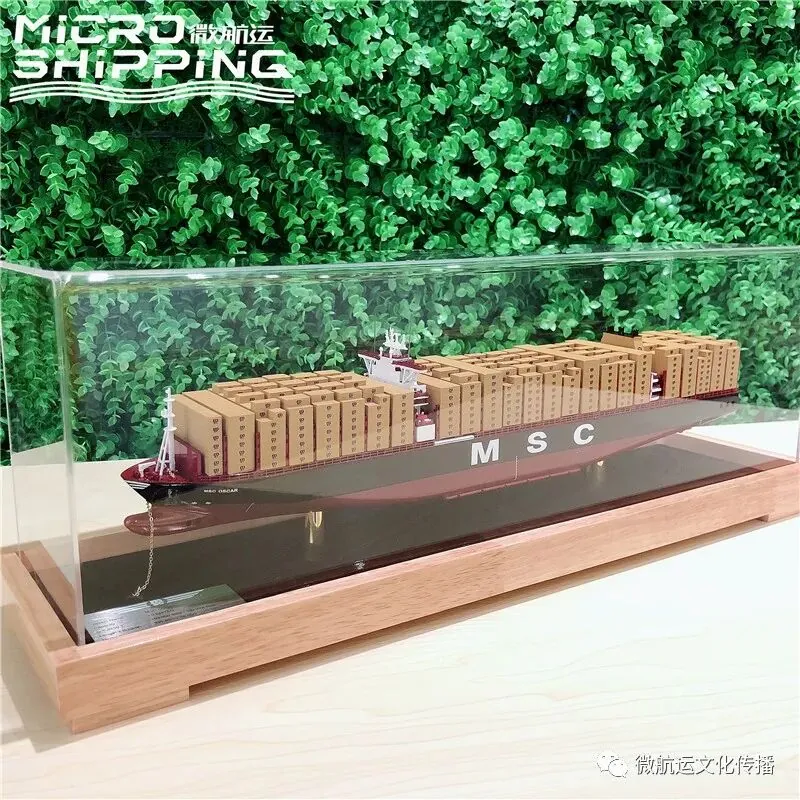
That is the logic of shipping themed gifts: not a logo printed on an ordinary object, but the recipient’s fleet, equipment and livery reproduced in miniature — hull colour, funnel mark, container array, owner code and all. A model like that gets placed on a desk or a boardroom console, and it stays there for years.
2. From giveaway to category: the fourteen-year version
Before 2012, shipping themed gifts, as a coherent idea, barely existed: maritime gifting meant souvenir ship models on the one hand, and printed giveaways on the other. Nothing connected the two. Nobody was building gift programmes around a client’s own fleet at desk-gift scale, with real production behind them: tooling, Pantone-matched livery, presentation packaging, export freight.
Our founder’s career runs through the industry itself: first at JAS Forwarding, the Italian freight forwarder; then shipping agency work at UASC, the United Arab Shipping Company; then as South China sales manager at Maersk’s Shenzhen office and branch manager of its Huizhou office. The category started from that vantage point: we know what a fleet manager notices, what a charterer keeps, and what a buyer is actually asked on the quoting call. As our founder puts it: I know you because I am from you.
In September 2012 the company registered in Shenzhen, close to the ports and the supplier base it serves. The early programmes were vessel models. Then the same logic moved onto land: alloy truck models for the drayage leg. Then the tank: ISO tank models for liquid bulk. Then the desk range — daily-use items shaped from the equipment itself.

Fourteen years on, the numbers behind our shipping themed gifts describe the category better than any slogan. The partnership with MSC began in 2012 and has now run for fourteen years without interruption: direct strategic cooperation with the carrier’s global headquarters, as an appointed and preferred supplier, invited to the Geneva head office to discuss the worldwide programme — covering everything from development and design through production to delivery.
Then the mega-vessel programme of 1,000+ model sets across four sizes, released in batches with the order book still growing. A single headquarters programme of 7,000+ models for another shipping line. And the global rollout of 15,000+ pieces — truck models, container models and container power banks — distributed to nearly 60 countries and territories for ONE, the ocean carrier formed when K Line, MOL and NYK merged their container operations. Each of those started as one brief from one buyer.
3. The product family: sea, land, air and rail
The family of shipping themed gifts now covers the modes the industry actually uses, and the pieces are designed to sit together as one range rather than as unrelated souvenirs.
Sea. Container ship models from 15 cm desk sizes to 4.2 metre exhibition installations, cruise ships, bulk carriers, and the port-side scenes — quay cranes and terminal sets — that frame them. The 60 cm MSC containership is the classic anniversary piece; the build process runs from drawings through tooling to batch production.
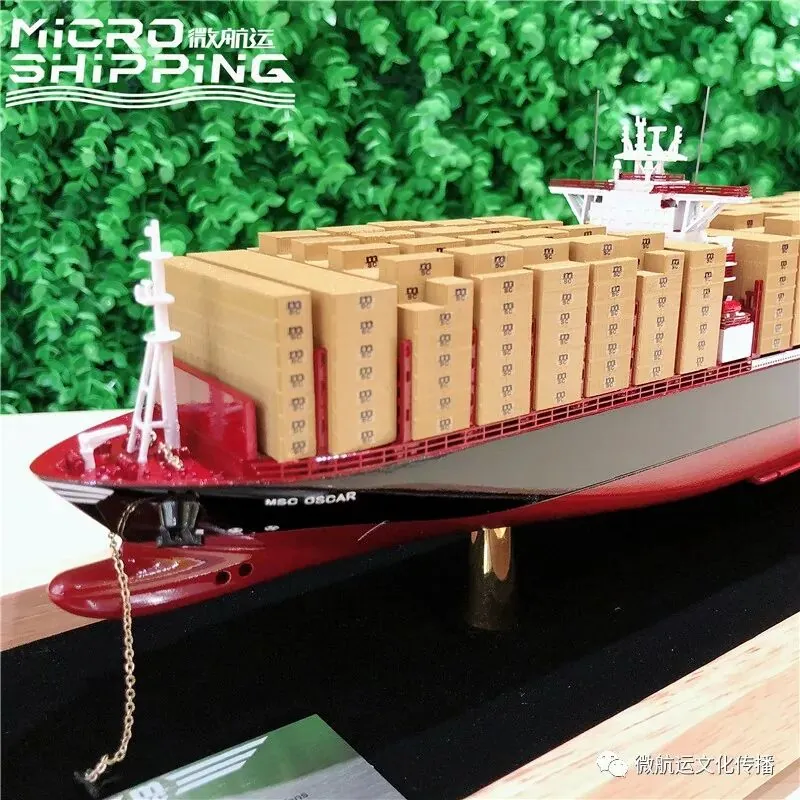
Land. Die-cast container truck models at 1:50, 1:64 and 1:87 — executive 1:50 pieces for the boardroom, smaller scales for driver networks and trade-fair volumes.
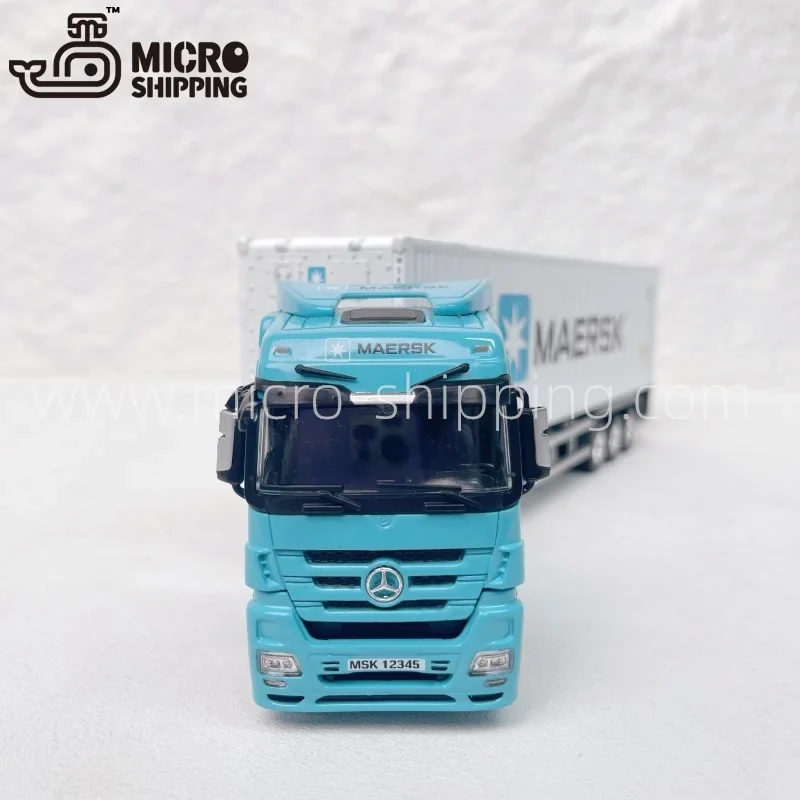
Tank. The 1:50 T11 ISO tank model serves the chemical and liquid logistics side — operators, lessors and ports that handle the tank at every mode change.
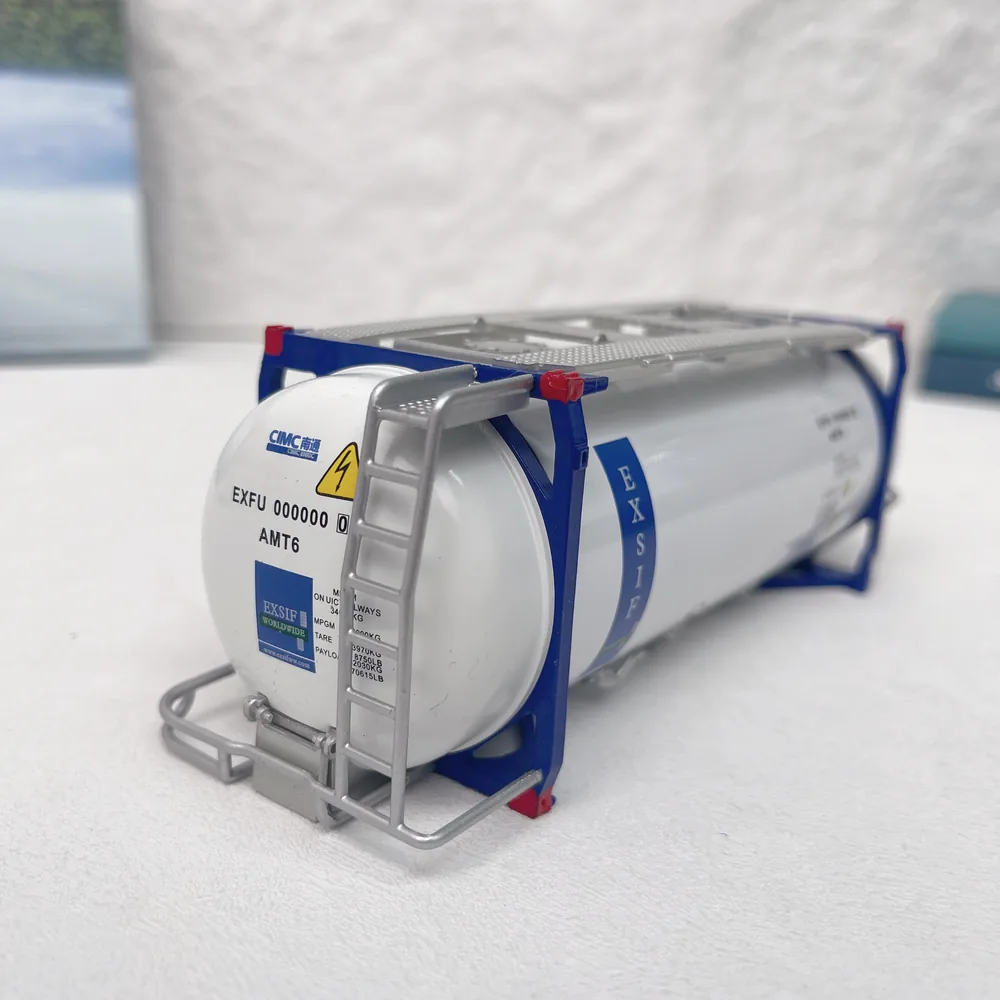
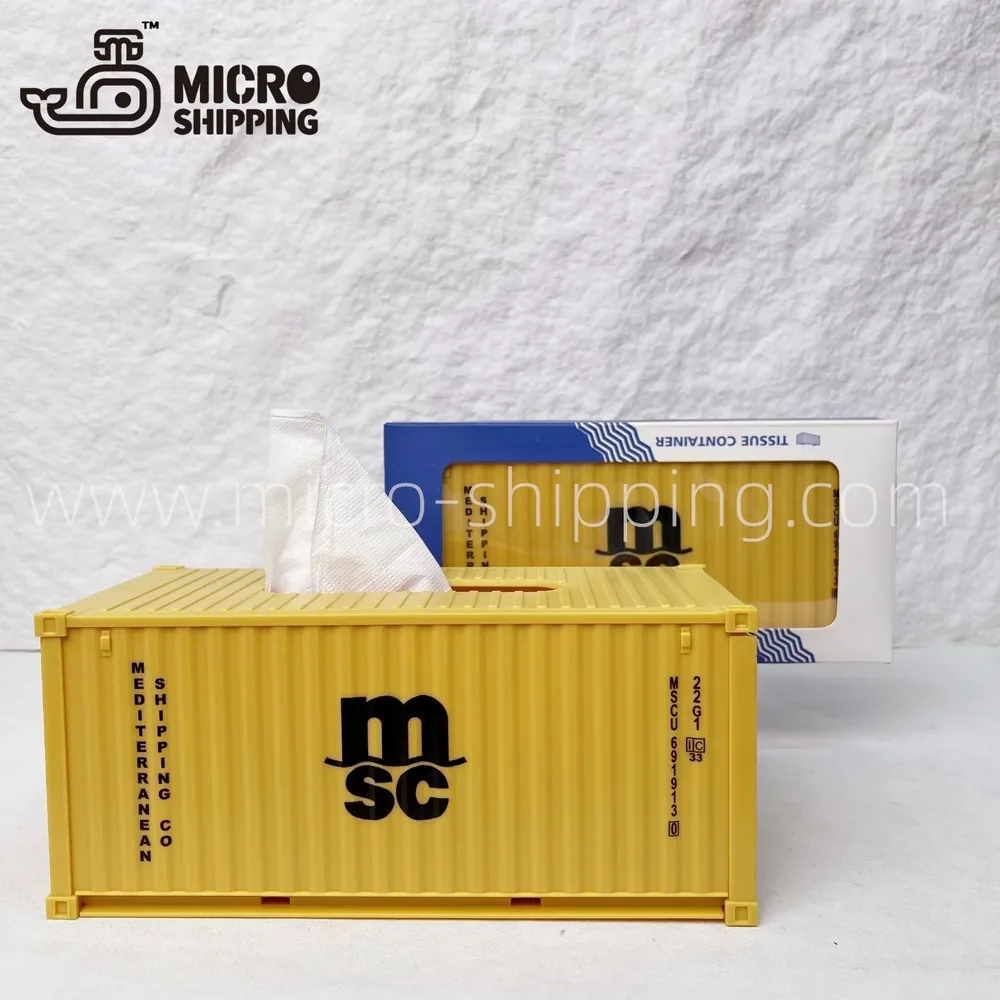
Desk. The daily-use range is where the category arguably earns its keep, because these items get touched every day: the container tissue box, container pen holders, storage boxes, power banks and USB drives — each carrying the same Pantone-matched livery as the flagship model.
4. What a shipping themed gift does for a logistics business
It makes the brand tangible. A logistics company sells a service, which is hard to put in someone’s hand. A model of its own equipment is the brand in physical form — and it photographs well, which keeps it working on LinkedIn long after the event that distributed it.
It stays where sales happens. A model of the customer’s own vessel sits on that customer’s desk and works as a silent, permanent reference to the relationship. Nobody throws away a replica of their own ship.
It fits every occasion the industry actually has. Company anniversaries and milestone years, new-building deliveries, trade fairs and exhibitions, delegation and courtesy visits, client appreciation and year-end gifting, long-service and retirement awards, employee welfare programmes, executive and management gifts, onboarding kits for new joiners, agent and distributor incentives, onboard retail — the same livery runs through all of them at different scales and budgets, which is how a one-off gift turns into a programme.
It travels across cultures. Container ships, trucks and tanks are recognised in every market the industry touches, and the livery carries the meaning. That is one reason the same shipping themed gifts repeat across 120+ countries and territories.
5. Four mistakes that sink a programme
Mistake 1: a logo on a generic product. An ordinary model with a logo on the door reads as a giveaway. The recipient’s own fleet — the real tractor, the real box, the real livery — is what turns it into a keepsake.
Mistake 2: guessing the colour. “Our blue” is not a specification. PANTONE or RAL references settle colour in a five-minute sample check instead of a debate at delivery.
Mistake 3: low-resolution artwork. A screenshot pulled from a website will not survive proofing on a 6 cm cab door. Vector files — AI, EPS or PDF — keep logos crisp at any scale.
Mistake 4: treating it as a one-off. The programmes that compound are the ones planned as programmes: the anniversary follows the exhibition, the new-size reorder follows the first delivery, and the tooling, colour references and print files stay on record so a reorder in eighteen months matches the first batch.
6. Choosing the right piece for the room
Three questions decide most briefs for shipping themed gifts. Who receives it? Executives and VIPs justify a 60–100 cm presentation model or a 1:50 alloy truck; a whole department or a customer list suits 20–30 cm desk models and the daily-use range; exhibitions and driver networks suit small-scale volume pieces. What occasion? Anniversaries take presentation pieces with engraved nameplates; trade fairs take pieces that pack and travel well. What timeline? Sampling runs one to two weeks (about a month for alloy), production 30 working days after sample approval — 30–45 for alloy, with large volumes adding 10–15 — and a brand-new mould needs 3–4 months, so year-end programmes are safest briefed mid-year. The scale guide puts the size trade-offs in one place, and our corporate gifting buyer’s guide covers materials and quality control in depth.
One more rule from the quoting desk: decide the programme before the piece. A fleet-wide range in one livery — a model for the boardroom, a desk item for the team, a truck for the customers — costs less per piece than three disconnected orders and reads far better when it arrives.
7. Where to start
The category described here — shipping themed gifts built around a client’s own fleet — is the one this workshop has run since 2012. If a piece of it fits your next programme, send us the short version: audience, quantity, deadline and livery files, through the quotation desk or the customization page. You will get options, pricing and a production schedule back — usually with a digital mock-up, so you can see your own equipment in miniature before anything is built.
For proof rather than description, read the case studies: a decade with one carrier, a 7,000-piece headquarters programme, port partnerships that renew year after year. Every one of them started the same way this category did — with one buyer who wanted a gift that spoke the industry’s language, and a workshop that did too.