
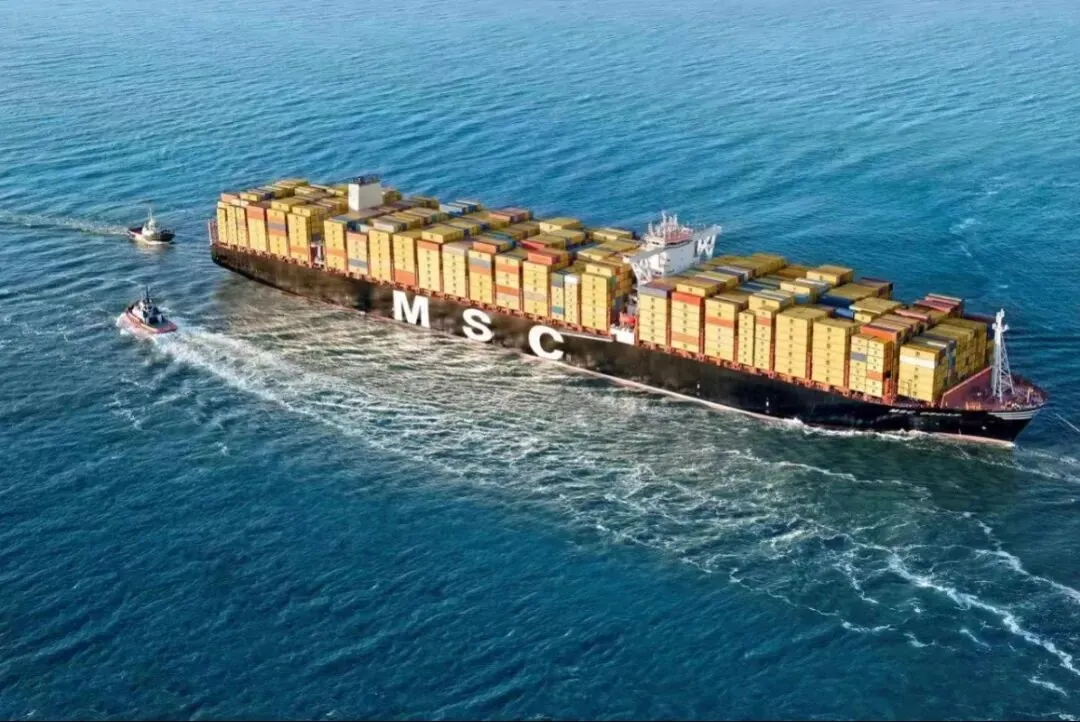
Stand at the rail of a container terminal — in Shenzhen, Rotterdam, Singapore or Long Beach — and you are looking at the most consequential shipping invention of the twentieth century. It is a corrugated steel box with no engine, no crew and no brand of its own. Yet almost everything you own has probably ridden inside one, and the global trade system that made your phone, your trainers and your coffee affordable was designed around it.
At Micro Shipping we have spent fourteen years building replica containers and the vessels that carry them, for the industry that moves them. So the history of the box is, in a very literal sense, the history of our business. Here is the short version.
1. Before the box: the break-bulk era
Until the 1950s, nearly all international cargo moved as break-bulk: barrels, crates, sacks and bales, loaded and unloaded by hand, piece by piece, by gangs of longshoremen working a ship’s holds with hooks and boards.
It was slow, dangerous and astonishingly expensive. Cargo could spend more time sitting in a port than sailing. Theft and damage were so routine that they were built into insurance premiums. And a single voyage might involve thousands of individual “pieces”, each one handled, stacked and papered separately.
Economists studying the era found that loading break-bulk cargo cost several dollars per ton. Everything about ocean freight — the ships, the ports, the trade routes — was shaped by that one brutal number.
2. 1956: a trucker’s idea
Malcom McLean was an American trucking entrepreneur, not a shipowner. The story goes that in the 1930s, waiting at a dock to unload his truck cargo piece by piece, he wondered why the whole road body could not simply be lifted onto the ship.
Two decades later he acted on it. On 26 April 1956, a converted T2 tanker named Ideal X sailed from Newark, New Jersey to Houston, Texas carrying 58 trailer van bodies above deck. At the other end, cranes lifted them straight onto truck chassis. No holds. No hooks. No piece work.
The economics were immediate and brutal for anyone in the old system: where loading break-bulk cargo had cost several dollars per ton, moving it in containers cost cents per ton. McLean went on to build Sea-Land Service, and by the end of the 1960s the container was no longer an experiment.
The container did not make ships faster. It made ports faster — and that turned out to matter far more.
3. The standardization war
McLean’s real masterstroke was not the boxes — it was giving the boxes away, in a sense. In the early 1960s his Sea-Land patents were opened up under pressure from the US Navy, which wanted intermodal shipping for military logistics, and the industry moved to standardize.
The result was the ISO container standard (dimensions and ratings under ISO 668, first published in 1968, with identification and marking rules later codified in ISO 6346). A box built in Shanghai has to slot into a ship in Hamburg, a crane in Long Beach and a truck in Lagos — corner castings, twist-locks, sizes and markings all defined to the millimetre.
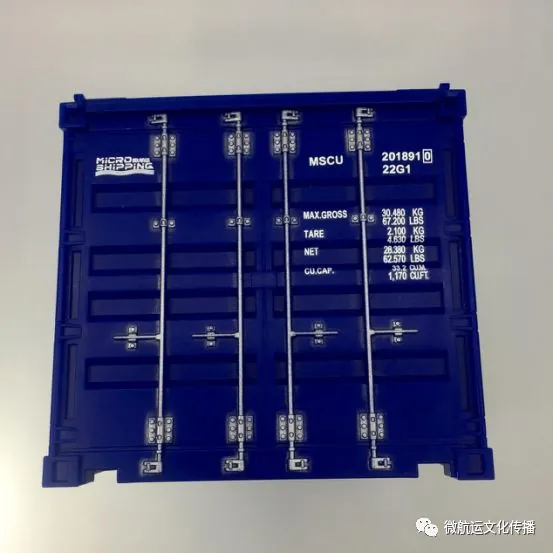
That standardization is why every container carries the same strict set of markings. If you have ever wondered what MSCU 691913 0 or 22G1 stamped on a door means, we have a full plain-English guide: How to Read Container Markings.
4. A family of boxes
“Container” sounds like one product, but the standard defines a family:
- 20’ GP and 40’ GP — the general-purpose workhorses. The 20-foot unit, the TEU, is the industry’s unit of count.
- 40’ HC (high cube) — a foot taller, for light, voluminous cargo.
- Reefers — refrigerated boxes carrying fruit, meat and pharma at controlled temperatures.
- Open tops and flat racks — for machinery and out-of-gauge cargo that will not fit through a door.
- ISO tanks — a tank inside a container frame, for liquids and chemicals.
The 8-foot width never changed — it is inherited from the road and rail gauges the boxes had to fit. That constraint, more than anything else, is why the box looks the way it does: corrugated steel walls for strength without weight, and corrugations that have become a visual signature recognised worldwide.
5. The ships get serious
The first container ships were converted tankers carrying a few dozen boxes. Each new generation multiplied the number: 2,000 TEU in the 1970s, 4,000+ in the 1980s (the post-Panamax era), 8,000 in the 2000s, and today’s mega-ships carrying around 24,000 TEU — a single vessel that would have been the entire annual capacity of a 1960s port line.
Bigger ships demanded bigger everything: berths deep enough for 16-metre draughts, gantry cranes with outreaches spanning 24 containers across, yards that could stack and sort tens of thousands of boxes, and software to track every single one. The modern terminal is less a dock than a high-throughput sorting machine.
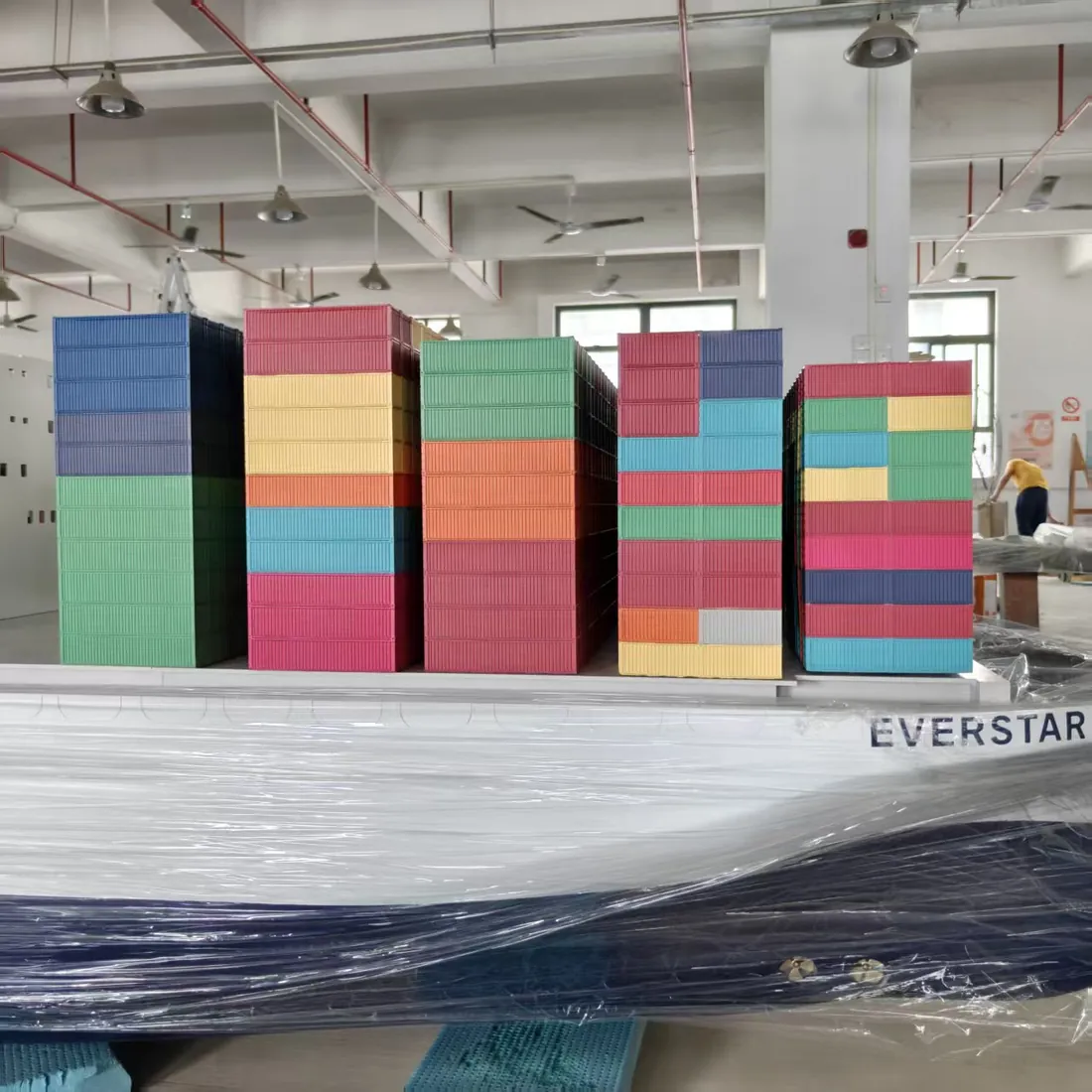
This is the era our clients live in. When a shipping line launches a new flagship, the model we build of it — whether a 60 cm desk model or the 62 cm Matson post-Panamax hull — has to carry the same stacked-wall geometry, the same container arrays, the same paint code as the real vessel. At 1:400 scale there is nowhere to hide an approximation.
6. Ports rewrite cities
The container did not just change ships; it redrew the map. Ports that embraced cranes and box yards — Rotterdam, Singapore, Hong Kong, and later the Pearl River Delta — grew into megahubs. Ports that clung to break-bulk withered.
Shenzhen is the story in miniature. In 1980 it was a fishing county across the border from Hong Kong; today it operates one of the busiest container ports on earth and builds much of the world’s electronics that fill those boxes. Our own workshop sits inside that logistics ecosystem — close enough to watch the boxes move.
The box even outlives its working life. A steel container typically sails for a decade or two before retiring into storage, housing, cafés and pop-up shops — a second career as a design icon.
7. Why the box became an icon
Ask a room of shipping people to draw their industry and most will draw the same thing: a corrugated box. No other piece of industrial equipment has been adopted as a logo, a toy, a gift and a desk ornament so completely.
We think the reason is simple. The container is the industry’s identity in one object — standardised, worldwide, quietly engineered. That is why so many of our programmes start with the box itself: 1:30 container models for boardrooms, container-shaped storage boxes and USB hubs for client gifts, full quayside crane-and-container scenes for exhibitions.
8. From real box to desk model
Which brings us to the practical question our clients actually ask: what does this history have to do with my gift programme?
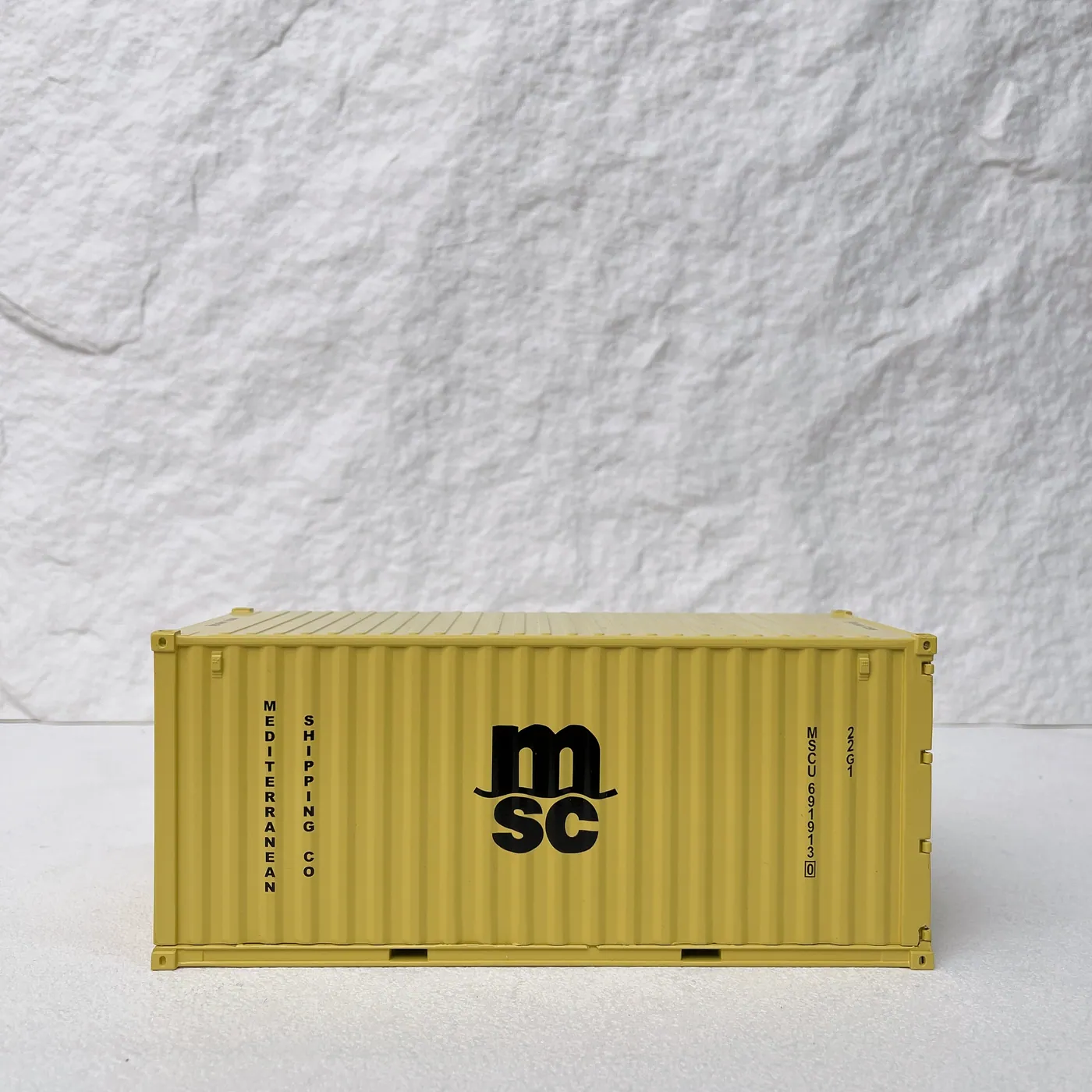
More than you would expect. The standards that made global trade possible are the same standards our models obey. When we build a container miniature, the markings follow ISO 6346 — owner code, check digit, weight block — because shipping people notice. When we build a vessel model, the container stacks follow the real stowage logic of the class. The history is not decoration; it is the specification.
If you are choosing a scale, our ship model scale guide walks through which size suits a boardroom, an event or a retail shelf. If you want to see how a model actually gets made — from CAD to tooling to hand-fitted container stacks — read How Models Are Built. And if you want the short version of what fourteen years of this looks like, the MSC ten-year partnership story is the best place to start.
The box is sixty-nine years old this year, and it is still the newest idea in the room. We just make it small enough to keep.