
Every shipping container you see — on a vessel, a truck or stacked in a yard — carries a small set of letters and numbers that tell you everything about it: who owns it, how big it is, what it may carry, and whether it is allowed to cross a border.
If you work in freight forwarding, logistics or at a shipping line, reading these markings at a glance is a genuinely useful skill. And if you are choosing container-themed corporate gifts or scale models, it is also the fastest way to judge whether a model is a faithful replica — every marking should sit exactly where it sits on the real box.
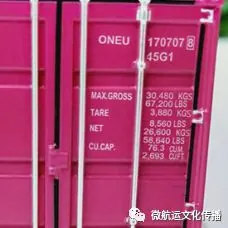
This guide covers the three groups of markings defined by ISO 6346 and related conventions: mandatory markings, optional markings, and operation markings.
1. Mandatory markings
1.1 Owner code — the first four letters
The four capital letters at the start identify the container's owner or operator. The first three letters are registered by the owner with the Bureau International des Containers (BIC); the fourth letter describes the equipment type:
- U — all freight containers (by far the most common)
- J — detachable freight-container equipment
- Z — trailers and chassis
One company can register several owner codes. COSCO, for example, uses both CBHU and COSU.
1.2 Registration number — six digits
The six digits that follow are the container's unique serial number. Shorter numbers are padded with leading zeros — 004567, not 4567.
1.3 Check digit — one digit
The single digit after the serial number, usually shown in a box, is the check digit. It is calculated from the letters and numbers before it, so a typo made when a container is recorded in a terminal or customs system is caught immediately.
How it works, simplified: each letter converts to a number, each position is weighted by powers of 2, the results are summed, divided by 11 — and the remainder (with 10 counted as 0) is the check digit.
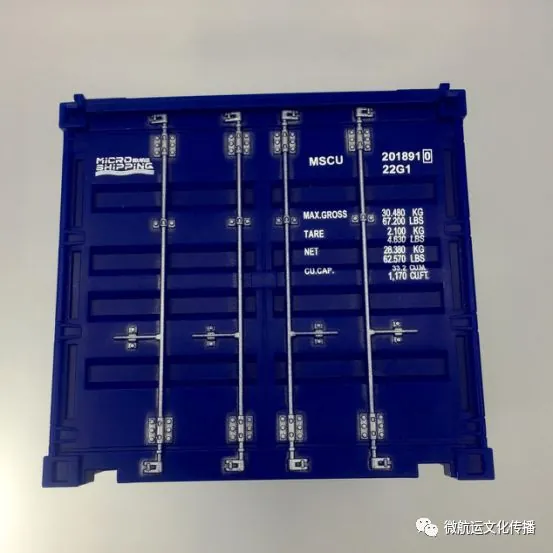
1.4 The weight and volume block
On the door you will find four standard figures:
| Marking | Meaning | Typical 20'GP example |
|---|---|---|
| MAX GROSS / MGW | Maximum gross weight (tare + payload) | 30,480 kg / 67,200 lb |
| TARE | Empty container weight | 2,120 kg / 4,670 lb |
| NET / PAYLOAD | Maximum cargo weight | 28,360 kg / 62,530 lb |
| CU. CAP. | Maximum internal volume | 32.6 m³ / 1,152 cu ft |
Quick check: MAX GROSS − TARE = NET.
2. Optional markings
2.1 Country code
Two or three capital letters indicate the registration country: CN for China, US or USA, DE for Germany, and so on.
2.2 Size and type code
Modern containers carry a four-character code such as 22G1. The first digit is the length (2 = 20 ft, 4 = 40 ft, L = 45 ft). The second digit covers width and height (2 = 8 ft wide, 8'6" high; 5 = 8 ft wide, 9'6" high-cube). The last two characters describe the type: G1 = general purpose with vents, R1 = refrigerated, U1 = open top, T-codes = tank containers.
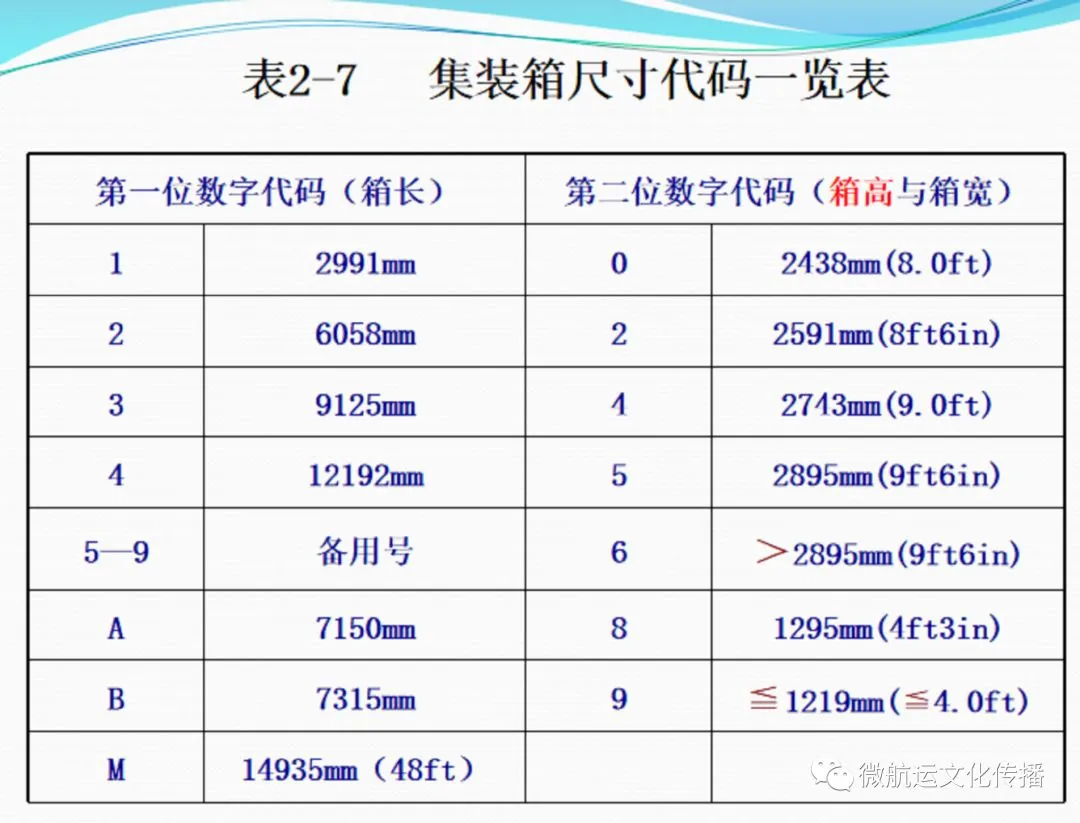
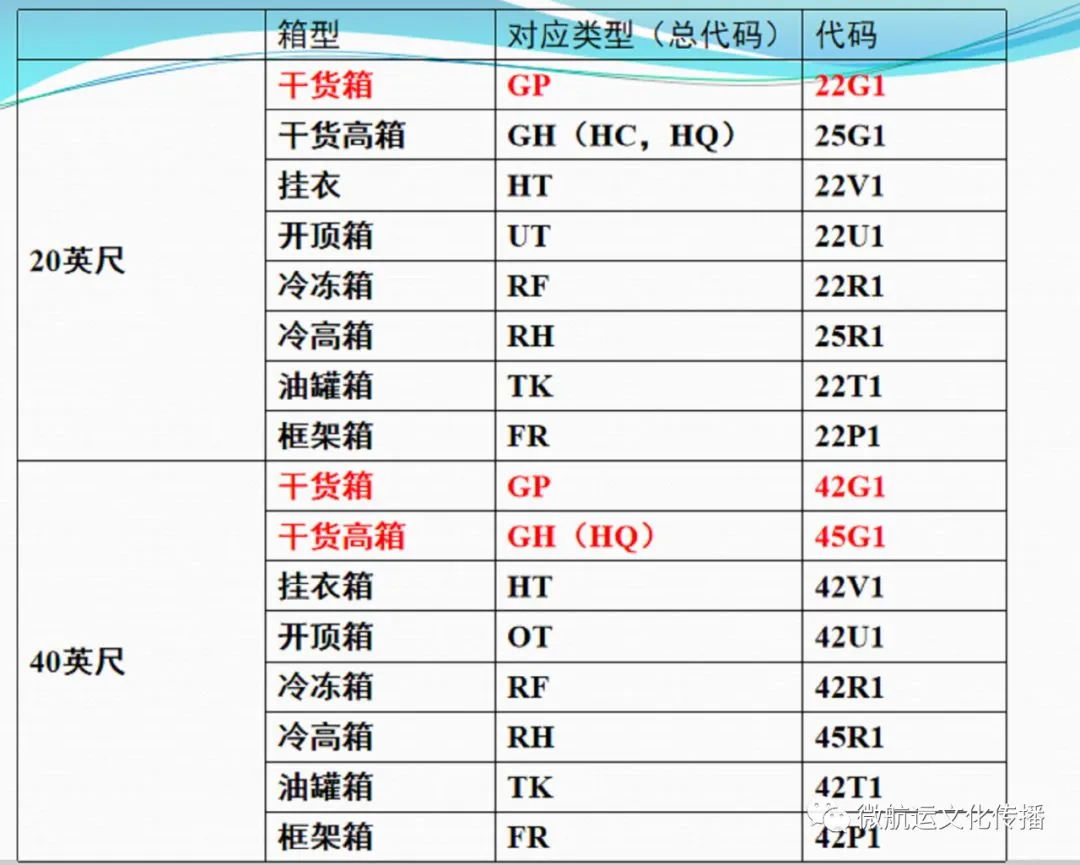
So 22G1 reads as: a 20 ft, 8'6" high, general-purpose container with small vents. Once you can decode this, you can identify the exact box type from across the yard.
2.3 Height warning mark
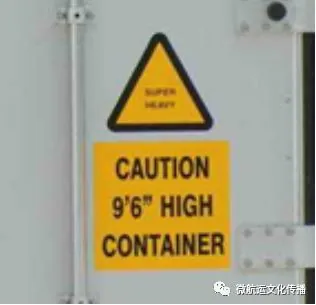
Any container taller than 2.6 m (8 ft 5 in) must display black-and-yellow over-height marks on both sides and both ends — a crucial warning for bridges, tunnels and double-stack rail cars.
2.4 UIC mark
Containers approved under International Union of Railways rules carry the UIC box mark. The number below indicates the railway company — 33 stands for China Railway.

3. Operation markings — the safety plates
3.1 CSC safety approval plate
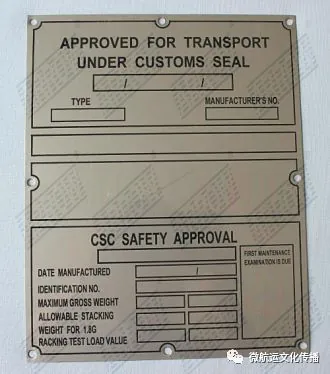
The Container Safety Convention (CSC) plate is the container's passport. Affixed to the left door, it records the manufacturer, date of manufacture, identification code and maximum operating gross weight. No valid CSC plate, no international movement. It is also the document used to check whether a box has been swapped.
3.2 CCC customs plate
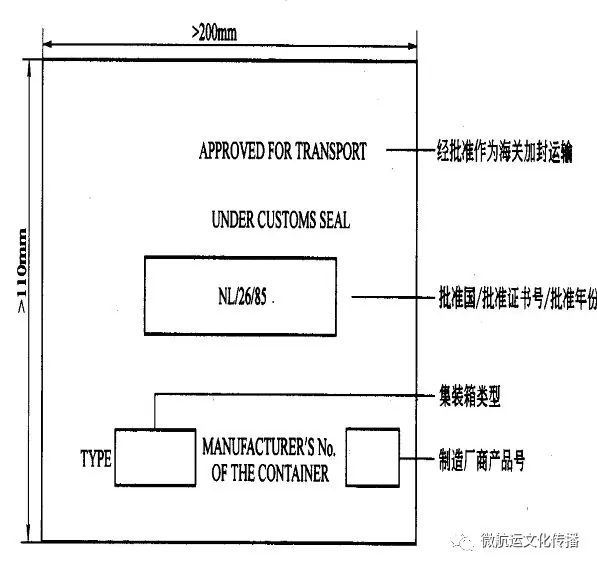
Under the UN Customs Convention, approved containers carry a customs approval plate, allowing sealed containers to cross borders without physical inspection. In practice the CSC and CCC plates are often combined into a single plate.
Containers must also pass structural tests supervised by classification societies — the badges of CCS (China Classification Society) or Lloyd's Register appear at the door end.

4. Markings on container models — why the details matter
At Micro Shipping, every container model we build reproduces the real markings — owner code, size and type code, even the weight figures — matched to the client's actual fleet. When your customer sees their own box code printed on a 1:50 alloy model sitting on their desk, that is brand precision they remember.
Explore our container models or request a quotation for your fleet.