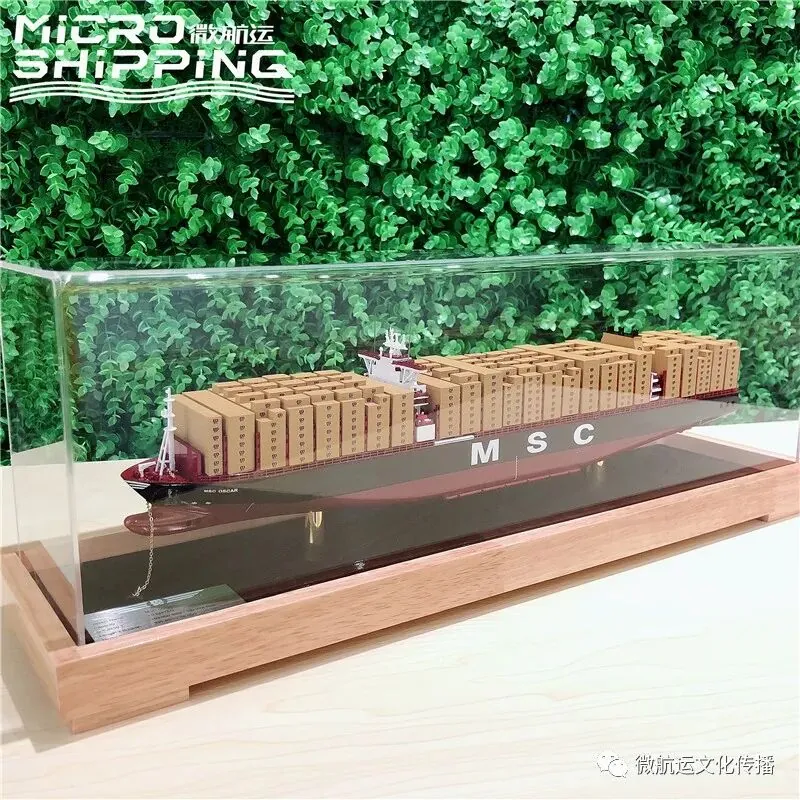
A container ship model looks like a single object. In production it is hundreds of parts moving through dozens of processes. Here is what actually happens between "we have the vessel drawings" and "the cartons are on the vessel".
Stage 1 — the hand sample
Everything starts with a sculpted prototype, checked against the vessel's real drawings and photographs. Hull lines, superstructure position, funnel shape — errors caught here cost days; errors caught after tooling cost weeks. Hand samples get revised, argued over and revised again.
Stage 2 — 3D files and a printed sample
Once the hand sample is approved, the model is rebuilt as 3D data. A 3D-printed sample verifies that what looked right in clay actually fits together: parting lines, snap fits, the seating of the acrylic cover.
Stage 3 — steel tooling
Approved geometry goes to toolmaking. For a hull at 1:700 or a container at 1:50, mould steel has to hold detail smaller than a millimetre — and hold it across a run of thousands, not dozens.
Stage 4 — the fitting bench
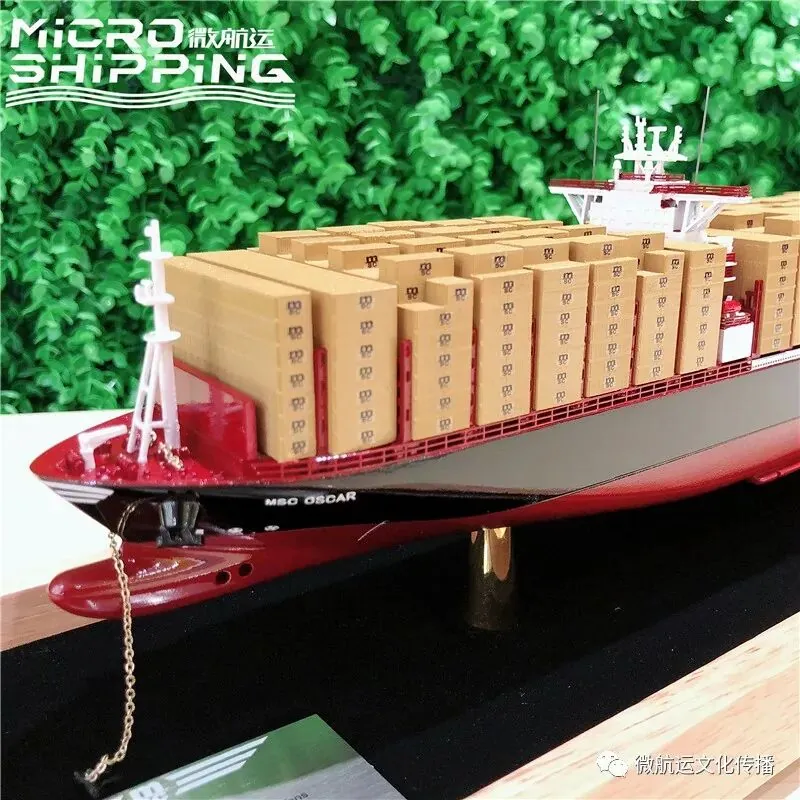
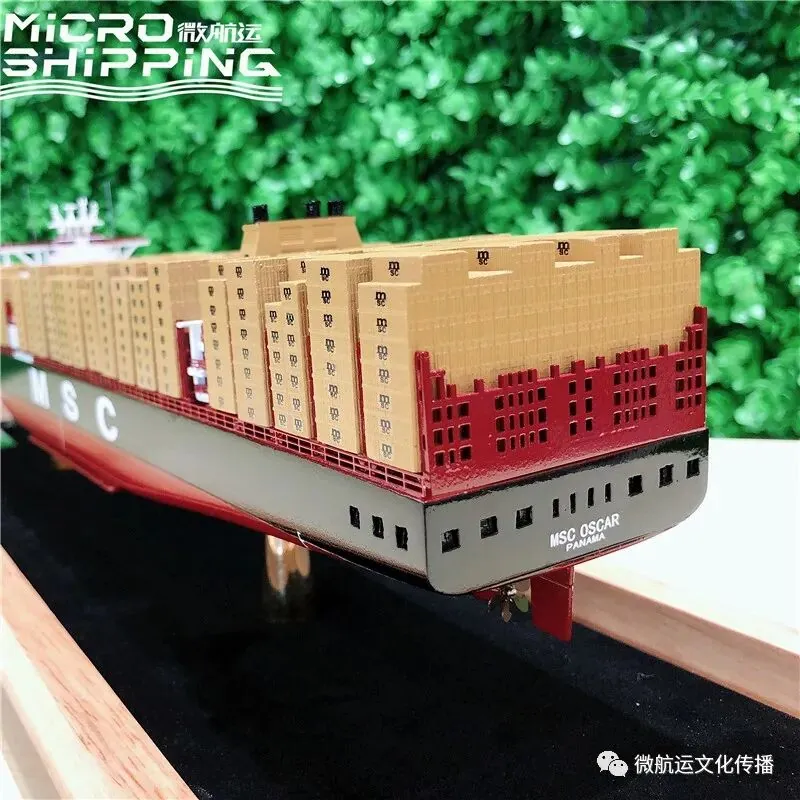
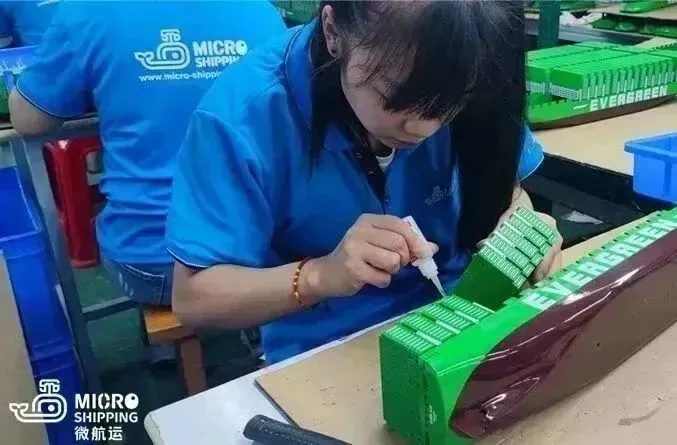
The parts that make a model read as a real ship are mostly too fine to mould economically: railings, ladders, antennas, cranes. These are cut and formed by hand from stainless steel. On a busy production day, the fitting benches are where the model earns the word "scale".
Stage 5 — colour, held under control
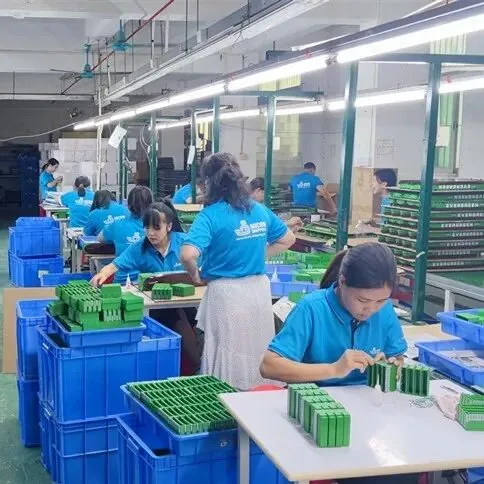
Container liveries are the hardest colour problem in this trade. A brand's green is not one green; it is a paint system on a hull, inks on printed containers and a colour on the gift box — and all three must agree, batch after batch. We hold colour approval records per programme and check each batch against the signed sample.
Stage 6 — inspection, three ways
On volume programmes, assembly inspection is staged in batches with the client watching. On one recent run, our team inspected on site while the client's headquarters joined by live video, sampling 30–50 units per batch across three inspection rounds.
Stage 7 — packed like it matters
A model that survives the workshop and dies in transit is a refund, not a gift. Packing is engineered: fitted acrylic covers, foam cradles, cartons stacked to a calculated pallet plan, moisture barriers for ocean freight.
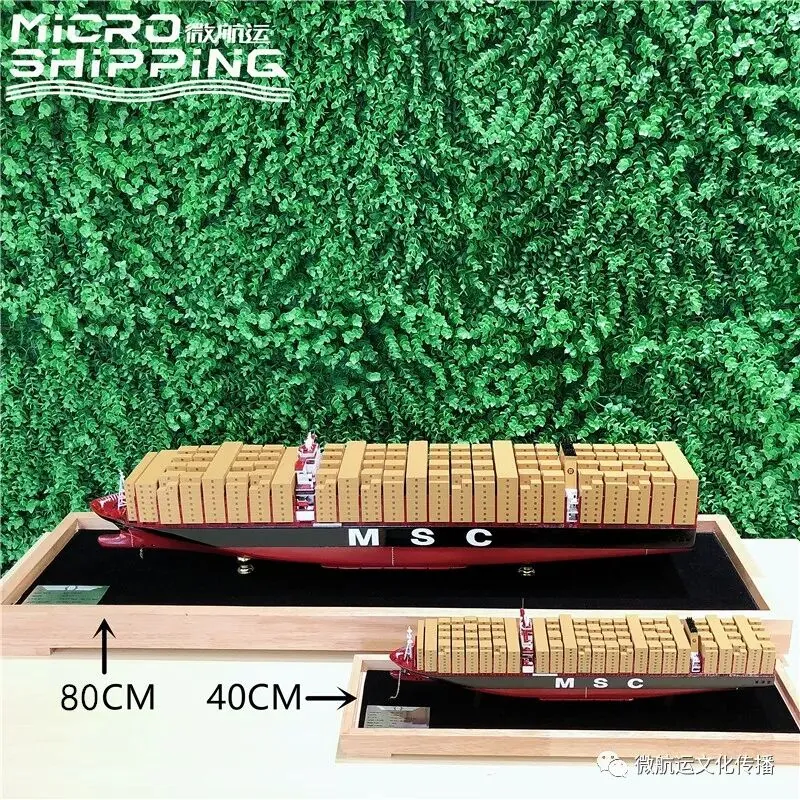
From 6 cm to 4.2 metres
The same seven stages, run at different intensities, cover everything we build — from 6 cm onboard-retail miniatures to a 4.2-metre crane-installed exhibition piece. If you are planning a model programme, the honest answer to "how long?" is: sampling 3–4 weeks, tooling 6–8, production 4–6, depending on scale and volume. Tell us your vessel and we will put real dates on it.