
If you buy corporate gifts for a shipping line, a port, a freight forwarder or a logistics brand, you already know the problem with generic swag. Mugs migrate to office kitchenettes. Umbrellas break by November. The gifts that survive — the ones that end up on desks, shelves and boardroom consoles — are the ones that carry the recipient's own identity.
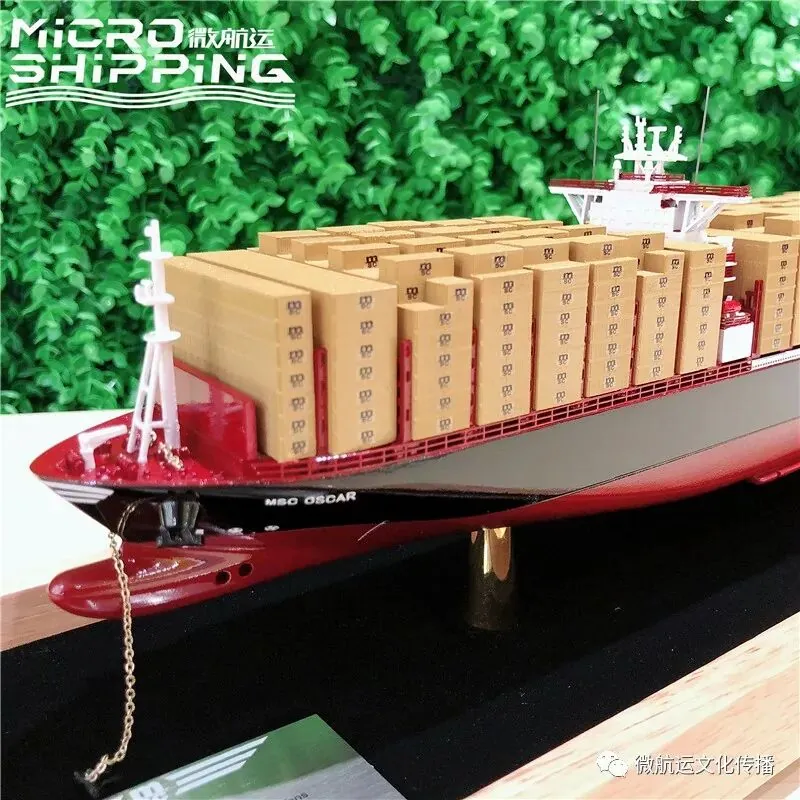
That is precisely what custom ship models do. They put the recipient's vessels, containers and livery on display in miniature: right down to the hull colour, the funnel mark and the name on the bow. We have been building them since 2012 — for 130+ brands across 120 countries and territories, on 500+ client programmes. This guide condenses what fourteen years of model-making taught us, so your first (or next) programme is specified correctly from day one.
1. Why a model outperforms ordinary gifts
A model of a client's own vessel is not merchandise; it is recognition. It says you know their fleet, their routes and their brand well enough to reproduce them. That is why custom ship models end up in boardrooms and reception areas rather than drawers — and why a programme, once started, tends to run for years: anniversaries, new-build deliveries, client dinners and exhibition giveaways each re-order the same hull in a new size.
It also photographs well. A containership model with its full box array is the most shareable object most marketing teams own, and it keeps working on LinkedIn long after the event that distributed it has closed.
2. Start from the real vessel
The best custom ship models begin with paperwork, not paint. Before we quote anything we ask for three things: profile drawings or good photographs of bow, stern and superstructure; official livery references; and brand colour codes. If drawings are unavailable, the shipowner's own fleet pages will do — the master pattern is built from whatever is authoritative.
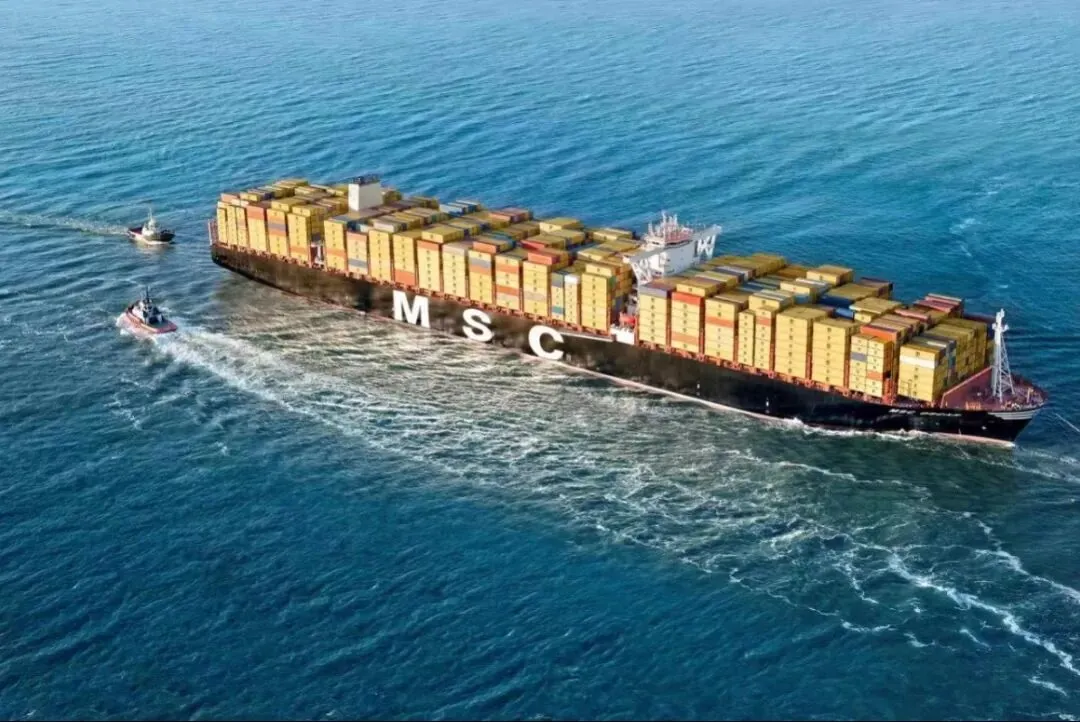
Colour is specified in Pantone or RAL, never as "like the photo". Screens shift from monitor to monitor; paint does not. Send both codes plus a vector logo (AI, EPS or PDF) and the livery can be matched at sampling stage instead of argued about at delivery.
One legal note: models of your own fleet need no paperwork from us. If the programme involves another company's brand — a port authority reproducing a calling line's vessel, for example — we will ask for written authorisation, which also smooths customs clearance on direct-to-brand shipments.
3. Scale: match the model to the room
For custom ship models, scale is not a technical decision; it is a furniture decision. Three bands cover almost every corporate programme:
- 15–30 cm — desk and team gifts. Fits a bookshelf, survives the post, and prices at a level where a whole team can receive one. The workhorse of client giveaways.
- 60–100 cm — boardroom and VIP pieces. A 60 cm MSC containership or a 62 cm Matson hull commands attention without dominating a room — the classic anniversary gift.
- 1 m to 4.2 m — exhibition and lobby landmarks. Installed pieces with engineered bases, crane access and freight planning. The largest we have built is 4.2 metres, installed under its own lifting plan.
Unsure which scale fits which purpose or budget? We keep a separate guide to ship and container model scales that walks through the trade-offs in detail.
4. Materials: alloy, resin or ABS?
Three material families cover most custom ship models, and the choice drives weight, feel and price:
- Die-cast alloy — the premium option. Weight (about 1.1 kg for a 1:30 box) gives it real-object presence, and doors can be engineered to open on hinges. Best for executive gifts and onboard retail, where the hand notices. See our 1:30 alloy container model for the finish standard.
- ABS plastic — light (roughly 0.2 kg at 1:35) and crisp to print, which makes it the efficient choice for volume programmes and trade-fair giveaways.
- Resin and mixed media — for hulls with complex curves and one-off presentation pieces; hand-finished, usually at 60 cm and above.
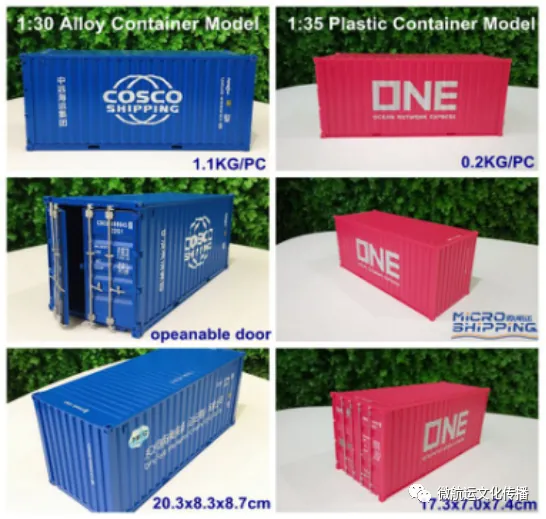
Weight matters more than buyers expect. Set both on a desk and the alloy version reads as a gift; the plastic one reads as a premium collectible. Neither is wrong — they simply serve different programmes.
5. Branding: livery, nameplates and packaging
Branding lands in four places. First the livery itself: hull colour, funnel mark and the container array — on a well-made model, every box carries the owner code, serial and check digit exactly where ISO 6346 puts them on the real box. Second, the ship name and IMO number on bow and stern, printed to scale.
Third, engraved nameplates — for anniversaries, launches and honourees. Fourth, packaging: a custom gift box with a fitted foam cradle turns the same model from a hand-off into a ceremony, and the box is often the first thing a recipient photographs.
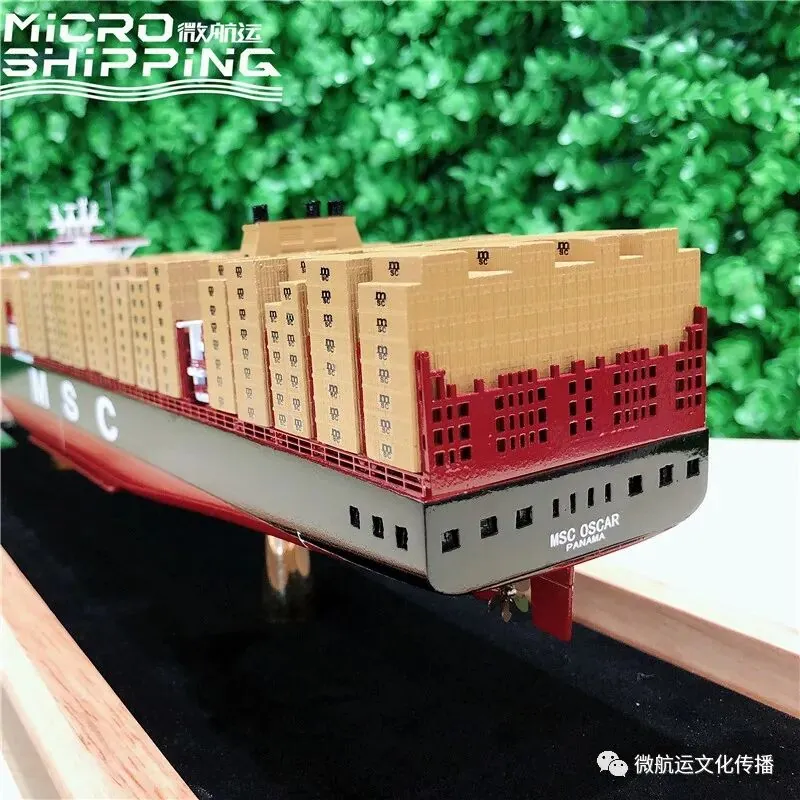
The same branding logic extends beyond hulls. The programmes our clients reorder most often are desk-scale: container pen holders, container tissue boxes and branded power banks — each carrying the identical Pantone-matched livery as the flagship model.
6. Quantities, sampling and lead times
The honest answers, because this is what every buyer asks first:
- MOQ. A single piece is possible — everything is made to order — but set-up work concentrates cost into one unit. Four to five pieces is the practical sweet spot: they pack into one master carton and travel in a single wooden crate, and the unit cost drops visibly. Gift programmes typically run eight to ten.
- Sampling. Samples are always charged: one to two weeks for standard pieces, about a month for alloy. Sample fees are credited against the production order — partially or in full depending on quantity. Expect the sample to be the moment the programme is really decided.
- Production. Thirty working days for standard colour, logo and packaging changes on existing tooling; thirty to forty-five working days for alloy; large volumes add ten to fifteen days. A brand-new hull mould takes three to four months.
Plan backwards from the ceremony date — and remember the seasonal curve. Buyer inquiries in our inbox peak between August and October as year-end gifting is prepared, so Christmas programmes are safest ordered by June or July.
7. Quality control: what we check before a model ships
Every batch of custom ship models passes a fixed inspection routine: livery colour verified against the Pantone standard, printing registration checked on hull and containers, container stacks aligned and square, doors and fittings cycled, and surfaces inspected under raking light for dust or orange peel. Volume programmes are sampled to AQL, and large orders are video-inspected before packing — so you approve the actual units, not a studio sample.
8. Packing and freight
Custom ship models that survive the workshop but die in transit are a failure of planning, not of craftsmanship. Individually boxed models go into double-wall master cartons — typically five per carton; large presentation models travel screwed into wooden crates; ocean consignments add moisture barriers. We ship EXW, FOB or CIF (DDP and DDU by arrangement), payment by T/T, and the mode — courier, air or sea — is chosen by quantity and deadline rather than by habit.
9. What actually drives the price
We do not publish a price list, because every programme is custom — but seven variables decide the price of most custom ship models:
- Scale and overall size
- Material: alloy, ABS or resin
- Livery complexity — container arrays and multi-colour hulls cost more than a plain hull
- Tooling: an existing hull versus a brand-new mould
- Packaging: bulk, gift box or custom casket
- Quantity
- Accessories: display cases, lighting, engraved bases
Fill in those seven in your brief and you will get a quotable answer in days, not weeks.
10. A checklist before you request a quote
- Vessel name, type, and reference photos or drawings
- Preferred scale or display size
- Quantity, and the date the gifts must be in hand
- Vector logo files plus Pantone or RAL codes
- Packaging preference: bulk, gift box or custom case
- Accessories: nameplates, display cases, lighting
Send it through our customization page — six steps from brief to delivery — or straight to the contact form. The same logic covers ISO tank models, quay crane scenes and full desk programmes. And for proof rather than promises, read the case studies — including a single programme of 7,000+ models delivered for one shipping line's headquarters.