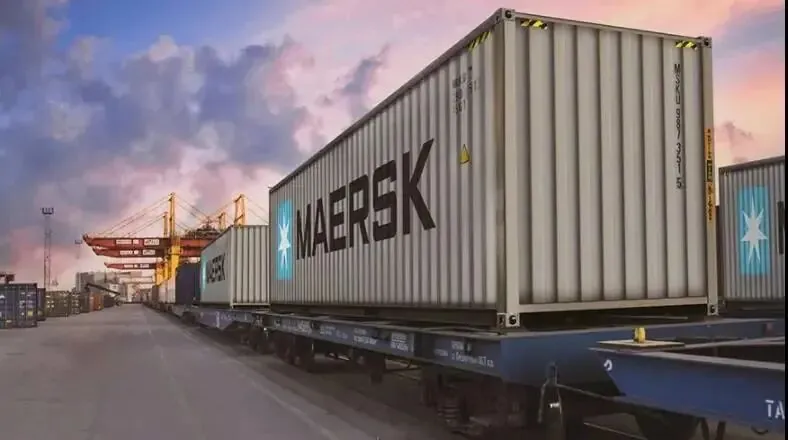
Container shipping does not stop at the port gate. For Maersk — deeply invested in China–Europe rail and the Belt and Road land corridors — the natural corporate gift was not a ship at all. It was a train.
Ten months, five steps
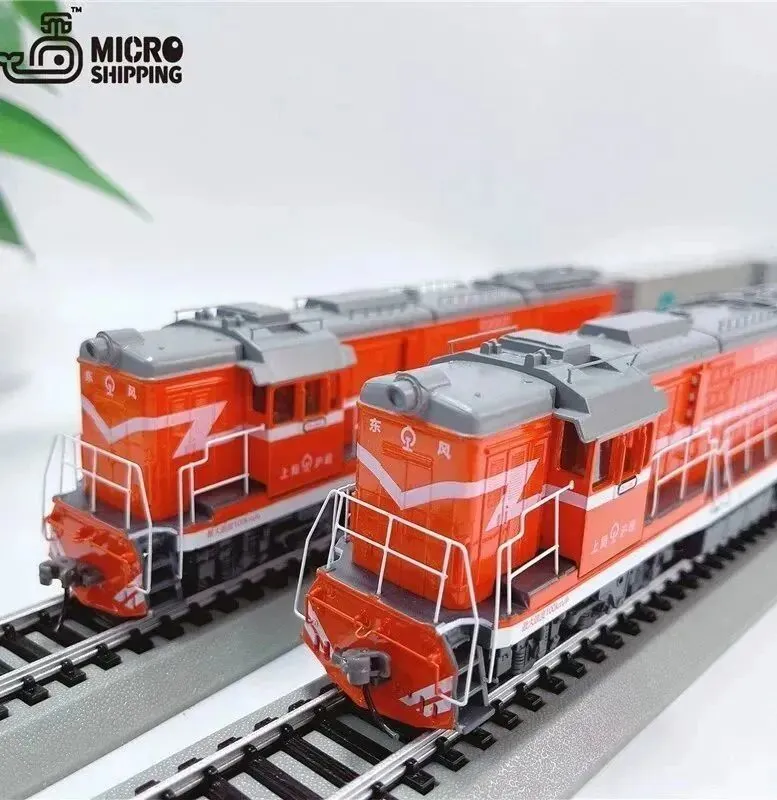
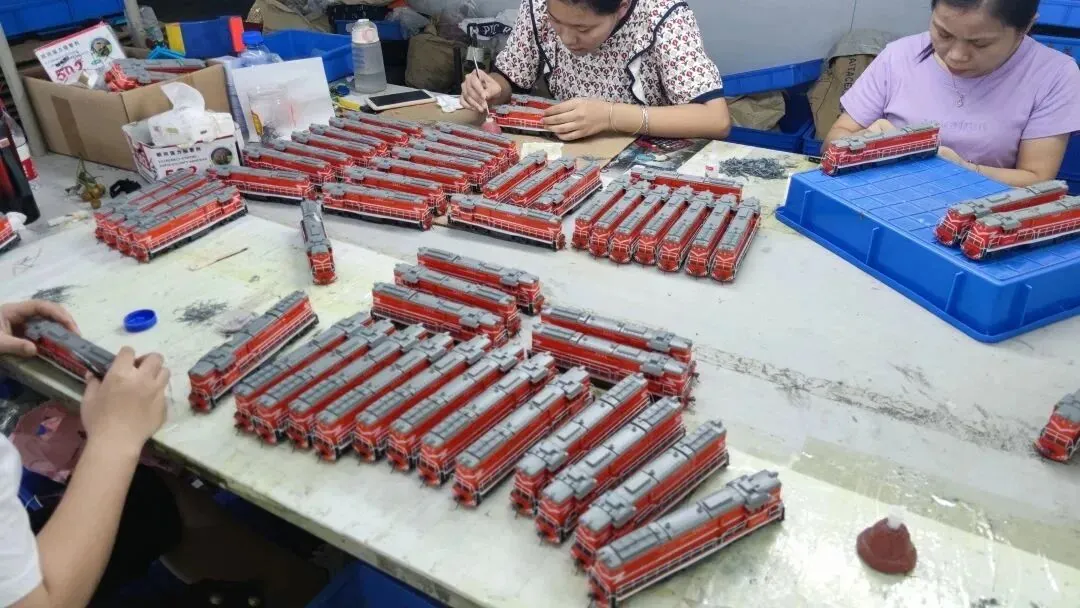
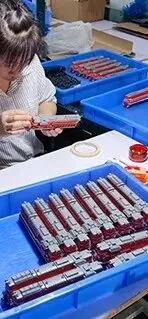
The set took ten months from first sketch to mass production, through five stages: 3D artwork, hand sample, tooling design and manufacture, pre-production sample review and adjustment, then batch production. Nothing about a die-cast train is quick — every wheel, coupling and container corner casting is its own tooling decision.
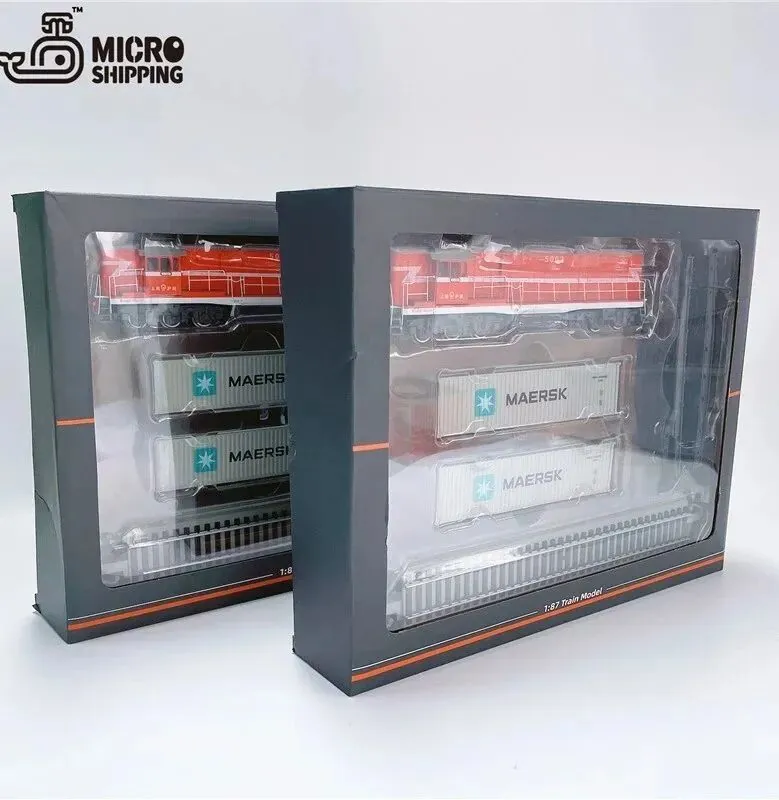
What is in the box
The standard set assembles to 75 cm of track: a 1:87 alloy DF locomotive (23 × 3.5 × 5.5 cm), a flat wagon (16.5 cm), and 40 ft containers (14.1 cm) in full Maersk livery, plus track sections — 850 grams of die-cast metal in a 33 × 26 cm gift box.
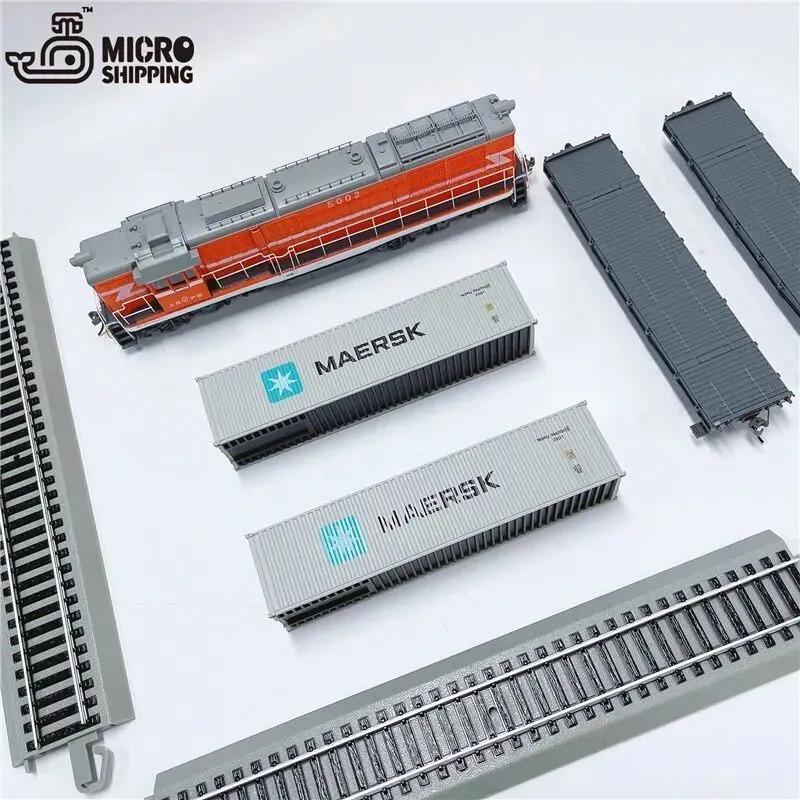
Inside each set: 196 components through 273 production processes — die-casting, polishing, spraying, pad printing and assembly — with the Maersk brand reproduced 1:1 against the real livery.
Railway companies wanted their own
The set did its job beyond Maersk. Railway and land-bridge organisations — including NSR Chongqing (200 sets) and Changchun International Land Port (100 sets) — commissioned versions of their own, turning a carrier gift into a product platform for the whole rail logistics sector.
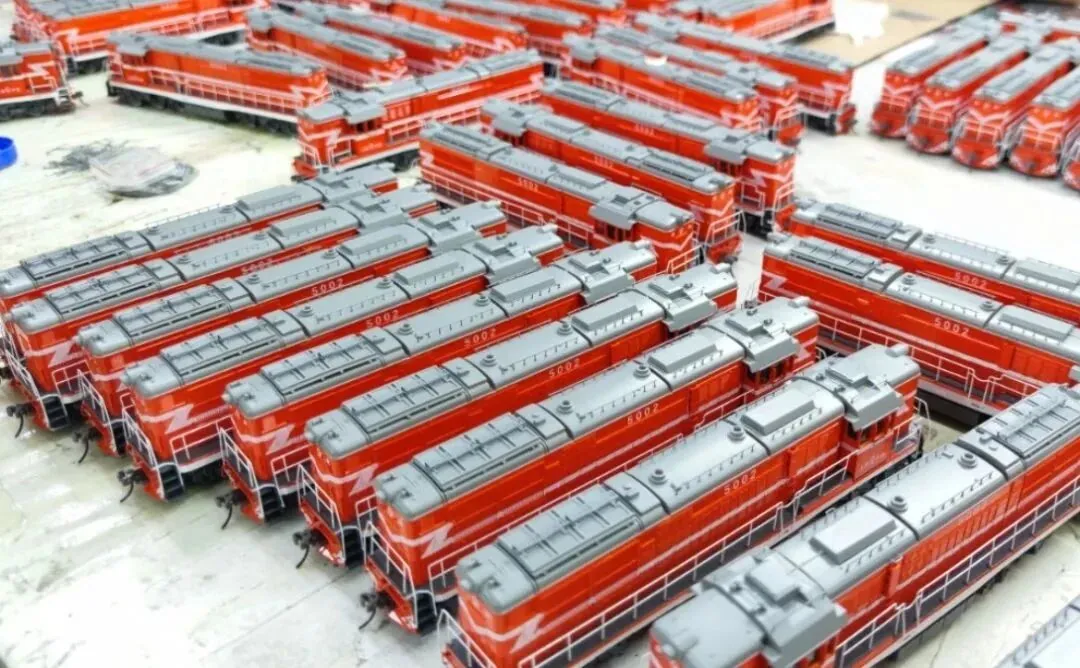
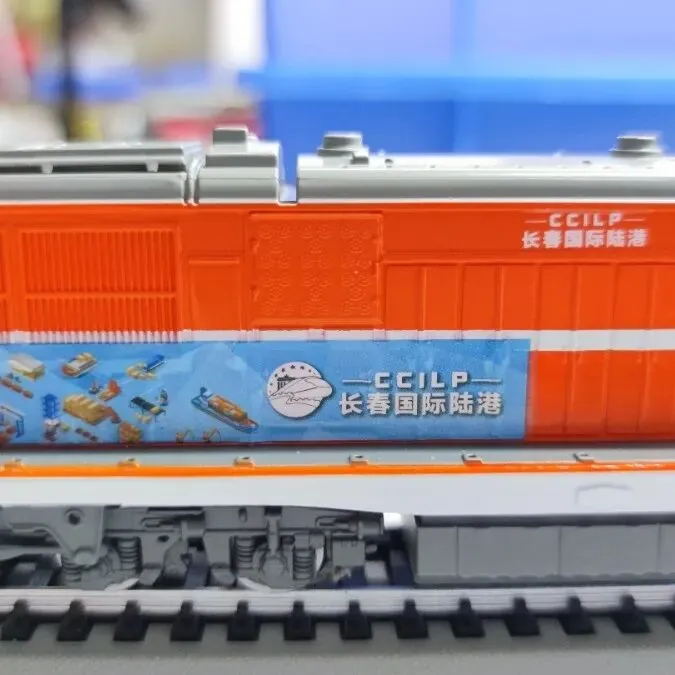
If your brand moves freight on rails as well as water, ask about the train platform — the tooling exists; your livery is the variable.